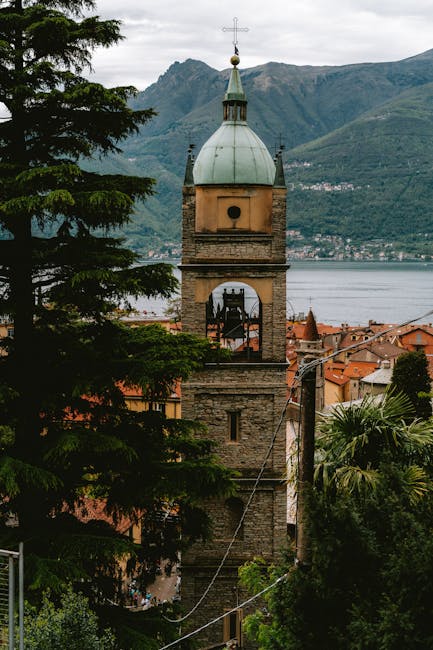






Introduction: Origins of Como’s walls and towers
Overlooking the southwest shore of Lake Como, the town of Como preserves tangible traces of its strategic, military and urban past. The walls and towers that once encircled the city are more than stone ruins: they tell the story of a frontier town between the Alps and the Lombard plain, a trading crossroads and checkpoint between Milan and Switzerland. Understanding Como’s fortifications is reading a long chronicle where Rome, the medieval era of the Lombard communes, local lordships, Spanish and Austrian rule, and later modern redevelopments that folded these structures into the contemporary urban fabric all intersect.
From the medieval Puerta Torre to the remains of Castello Baradello, each tower and stretch of wall had a clear role: active defence, road control, a status symbol for leading families, or a platform for military installations and artillery. The walls also served as urban markers for residents: entry gates regulating trade flows, sites for markets, spots for proclaiming municipal ordinances. Over centuries they were altered, shortened, incorporated into houses and new streets. Today, a walk around these remnants lets you read the city in section, appreciate architectural layers and imagine the vibrant medieval life that once unfolded there.
Beyond pure military history, Como’s walls and towers give visitors a direct connection to the lake landscape. Many fortified positions face the lake as if resuming the role of observatories: watching boats, storm clouds and Alpine passes. These viewpoints make studying the fortifications doubly captivating: you read both geopolitics and geography — the town growing between mountain and water, armed with its walls to resist, trade and exist.
This article is aimed at the curious traveler, the history buff and anyone planning a practical visit: you’ll find immersive descriptions of the main monuments, exact addresses, usual opening hours, indicative entry prices and practical tips to optimise your movements around Lake Como. Information is presented as rigorously as possible and paired with local tips (best times for lighting, pedestrian access, visit combinations with nearby sites). Finally, photographic markers
 Click here to discover Como on a guided visit and commentary cruise
are provided to help you visually locate sites, prepare your travel notes, or select royalty-free images for your keepsakes.
Castello Baradello: the sentinel on the hill
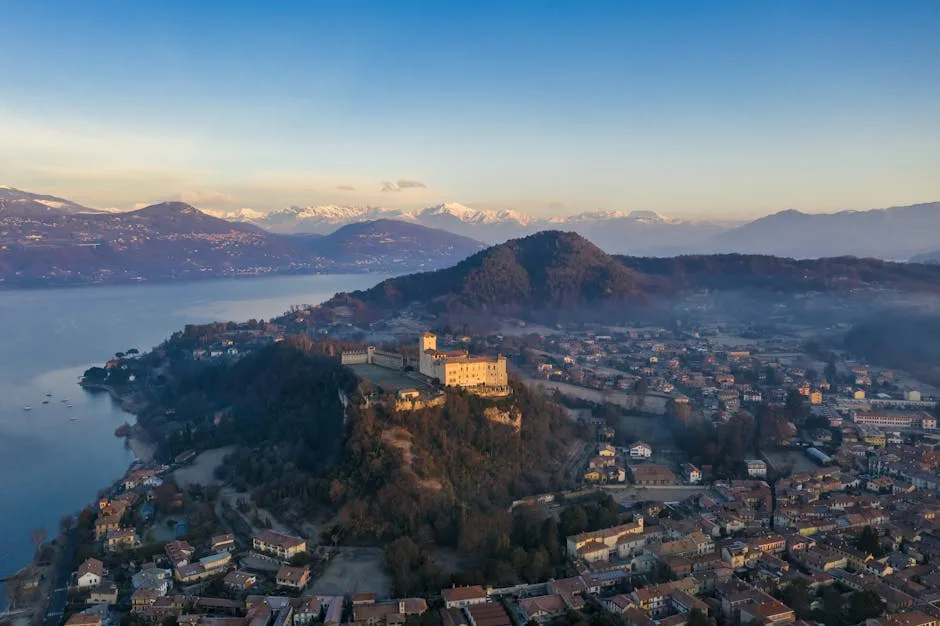
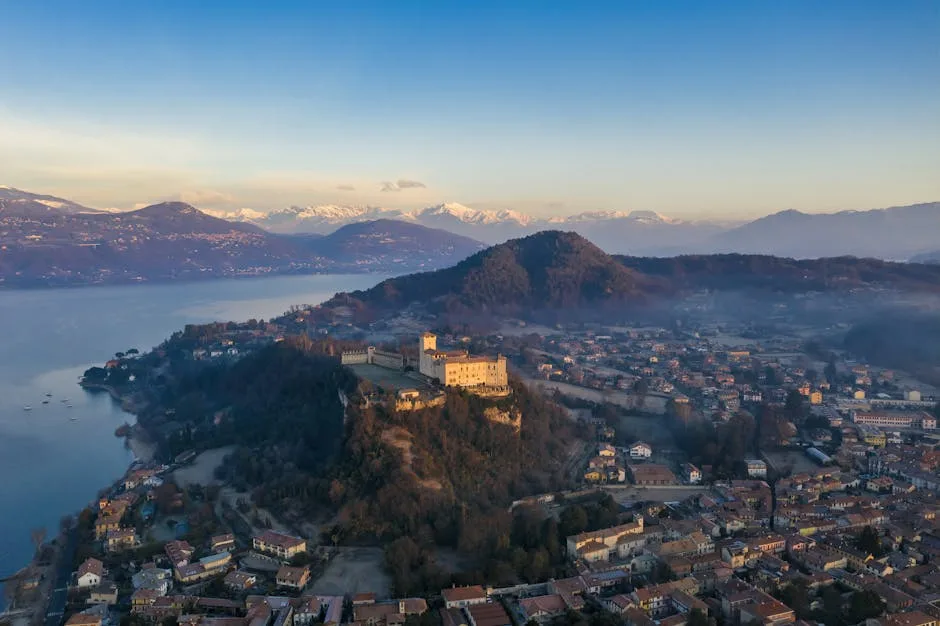
Castello Baradello, perched on Baradello hill northeast of Como’s historic centre, is arguably one of the most striking symbols of the city’s medieval defences. Address: Via Castello Baradello, 22100 Como CO, Italy. The fortress, of Lombard origin and heavily modified during the Middle Ages, dominates the town from a strategic position about 430 metres above sea level. From its ramparts the view sweeps over much of Lake Como, the Lombard plain and, on clear days, the surrounding peaks.
Visiting and access: access to the castle is usually via a well-marked hiking path from the Sagnino district or from Porta Torre depending on the chosen route. Opening hours: the site is often freely accessible outdoors every day; however, access to interior rooms, when open to the public, follows seasonal hours. Typical times (to be confirmed locally) are: April–October 09:30–18:30, November–March 10:00–16:00. Entry fees: outdoor visits are free; guided ascents and access to certain interior sections may require an entrance fee around €4–7 per person. Note: school groups and guided tours by reservation may have specific rates.
Immersive description: the approach to Castello Baradello is a gradual climb through the hill’s Mediterranean vegetation, punctuated by stone steps and viewpoints offering rest stops. The castle appears as an assemblage of towers and refurbished curtain walls: arrow slits, parapets and stone stairways tell the story of surveillance and defence. The tallest tower now serves as an observation point, letting you feel the verticality and isolation of a fortress that once dominated the valley access routes to the town.
Practical tips: favour late sunny afternoons for golden light on the stone and lake, but beware: the climb can be slippery after rain — good shoes recommended. Bring water in summer and a light windbreaker in mid-season; it can be cooler at the top. For photographers, mornings give softer light on the east side, while sunset bathes the lake in deep orange. Combine a visit to Castello Baradello with a stroll through the historic town centre, notably the Cathedral of Como (Duomo di Como, Piazza Duomo, 22100 Como CO) and Porta Torre, nearby, for a full day of exploration.
Click here to hike with funicular and boat
Porta Torre and the remains of the communal walls
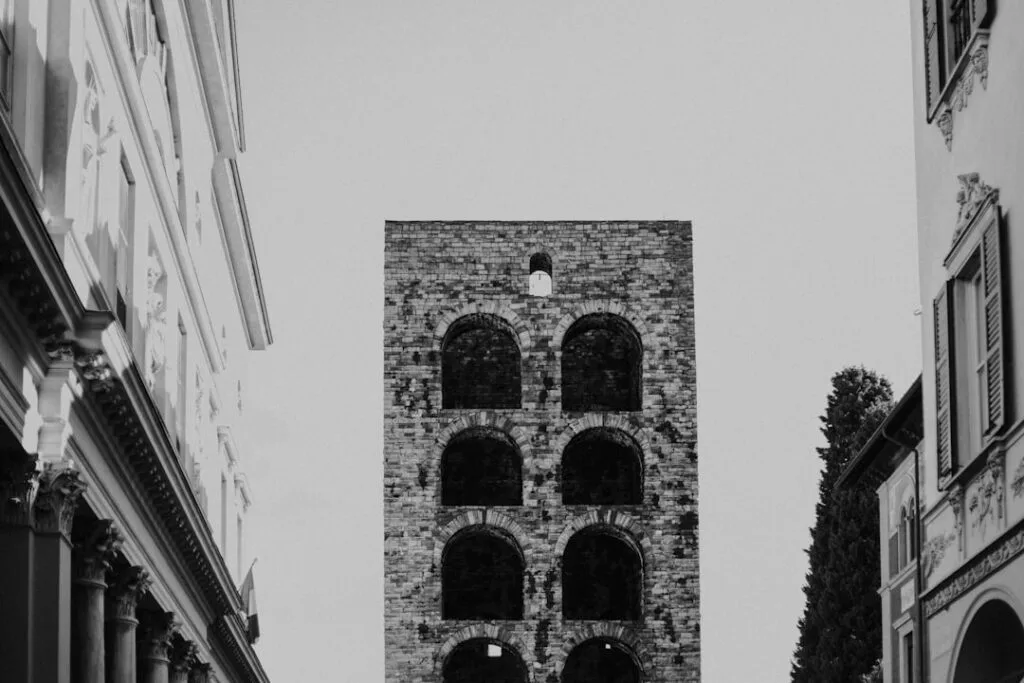
The Porta Torre is arguably one of Como’s most famous and recognizable medieval structures: a tall gate-tower built in the 12th century to complete the town’s defensive walls. Approximate address: Piazza Torre / Piazza Porta Torre, 22100 Como CO, Italy. The tower marks the old line of the municipal walls and served as a control point for entering the city. Today it can be seen from many spots in the historic center and is a must-see landmark during a stroll through the medieval streets.
Visit and access: The Porta Torre can be admired from the outside at any time of day; access to the top is rare and depends on occasional openings organized by the municipality or local associations. Hours: generally visible 24/7 from the outside. If interior visits are scheduled (cultural events, heritage days), they follow special time slots often announced on the Comune di Como website. Cost: outdoor viewing free; interior visits and events paid and variable (often €3–6 depending on the event).
Immersive description: approaching the Porta Torre you feel the weight of the stone and the scale of medieval defensive architecture. The massive tower contrasts strongly with the elegant facades of the center: in a few streets you move from bourgeois houses to the austerity of a city gate. The communal walls that once continued linked the Porta Torre to other bastions and gates, forming a continuous circuit now interrupted by modern openings. Walking along the presumed lines of the old ramparts you spot curtain-wall fragments integrated into private buildings, stretches of wall reused as foundations, and sometimes religious niches reset into the masonry.
Practical tips: the Porta Torre is close to other major sites, making it easy to combine visits: plan a stop at the Museo Archeologico « Paolo Giovio » (Via Diaz 84, 22100 Como CO) or Piazza Duomo (Duomo di Como, Piazza Duomo) for a day focused on the city’s history. Photographers should hunt down the narrow alleys that offer dramatic low-angle views of the tower framed by arches and colorful facades. For a deeper historical approach, ask local guides or the tourist information office (Ufficio Turistico, Piazza Duomo 14, opening times vary) about themed guided tours dedicated to the ramparts.
Click here to explore the historic center of Como
Urban traces: domestic towers, embedded curtain-walls and modern adaptations
Beyond isolated monuments, Como’s walls are readable in the urban fabric. Many towers and wall sections have been incorporated into civic buildings or converted into private homes, shops or decorative elements. This integration shows a pragmatic use of urban space: once militarily obsolete, the walls found a second architectural life. Several addresses and specific spots let you observe these features while wandering the town.
Viewing spots: stroll along Via Vitani, Via Boldoni and Via Tommaso Grossi (22100 Como CO) to spot medieval wall stretches inserted into modern facades. The area around Piazza San Fedele and the chiesa di San Fedele (Piazza San Fedele 4, 22100 Como CO) preserves plinths and wall fragments integrated into religious and civic structures. The Museo Storico (if open), municipal archives and various information plaques around town also help locate traces of the old fortifications.
Immersive description: walking these streets you see original medieval stones serving today as lintels, thresholds or side walls for shops. The joints, patina and stone-cut vary sometimes from one bay to another, revealing successive building campaigns and interventions. In some houses, pointed-arch windows or cavities correspond to former arrow slits turned into dormers. This juxtaposition of old and contemporary makes the town feel alive and gives the impression that time is layered, visible to the naked eye.
Practical tips: for those interested in urban archaeology, bring a specialist local guide or join a themed walk. Morning strolls often reveal lesser-seen details when shops are closed and light grazes the facades. Some cafés and artisan workshops housed in former fortified homes offer visits on request. For documentation, consult the Biblioteca Comunale di Como (Piazza Duomo 6, opening times vary) and publications from the Museo Archeologico Paolo Giovio, which hold old plans showing the ramparts’ evolution. Finally, respect private property: many remains are part of inhabited houses, so observations should be made from the street or with owners’ permission.
What to see and do around Como’s walls?
Plan according to season and peak hours.
1. Cruise and funicular for panoramas
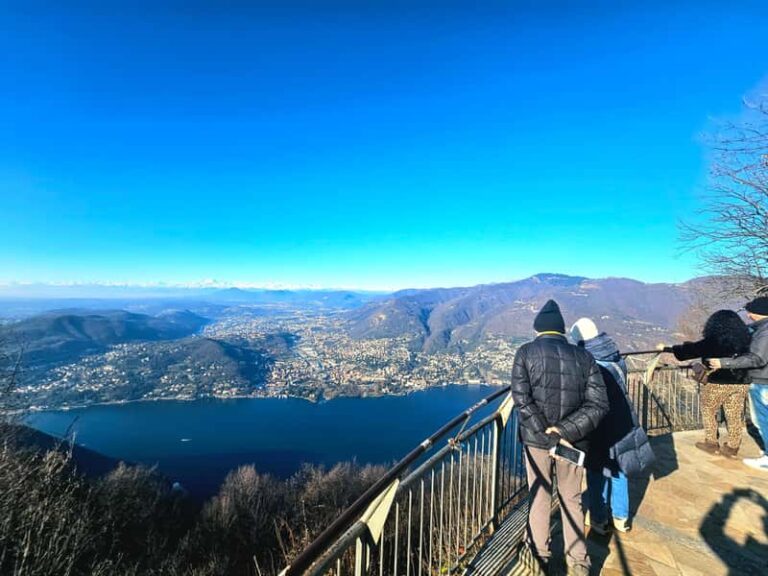
An hour-long boat trip to place the town in its lakeside setting, then the climb to Brunate for sweeping views over the walls, the Porta Torre and Castello Baradello. Handy for timing morning or evening light.
- ⏱️ Duration: 2 hours
- 🚩 Departure: Molo Sant’Agostino, Piazza Cavour
- 💡 Highlight: Panoramic lake and ramparts views from Brunate
- ⛴️ Transport: Boat + funicular
2. Guided walking tour Como & Brunate
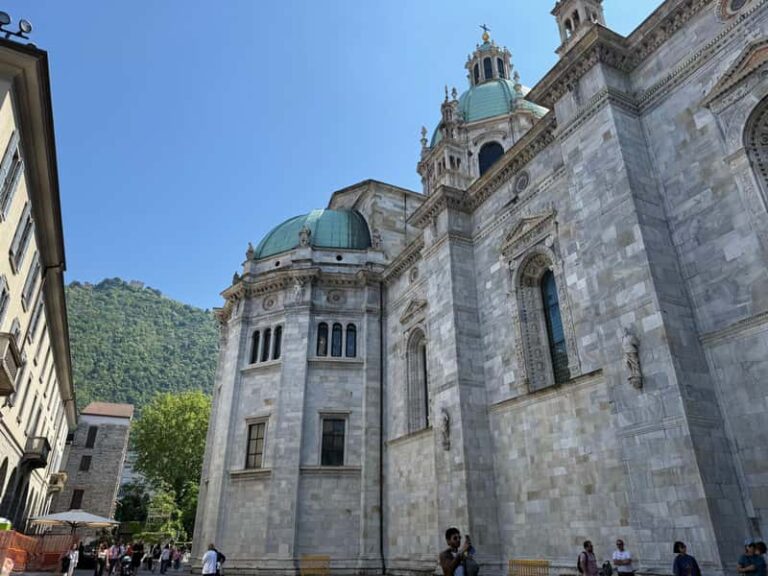
A focused walking tour on urban history: from the Duomo to the Porta Torre, then up to Brunate to put the walls into the landscape. Ideal for spotting towers built into structures and understanding lost street patterns.
- ⏱️ Duration : 4 hours
- 📍 Route : Central Station → Duomo → Porta Torre → funicular → Brunate
- 🗣️ Languages : English, Indonesian
- 💡 Highlight : Guided historical approach and local recommendations
Heritage enhancement and cultural tourism
The promotion of Como’s walls and towers is a joint effort between the municipality, local history groups and tourist offices. These stakeholders aim to preserve the heritage while making it accessible and meaningful for residents and visitors alike. Useful address: Ufficio Turistico Como, Piazza Duomo 10, 22100 Como CO. Typical tourist office hours: 09:00–18:00 (April–September), 10:00–16:00 (October–March) — check directly for holiday periods. Fees: information is free; for organized guided tours, expect €8–15 per person depending on duration and guide.
Initiatives and events: heritage days, night walks and temporary exhibitions are regularly held to highlight the fortifications. The themed walks « Mura e Torri » (Walls and Towers) offer historical talks, lectures and sometimes special access to towers normally closed to the public. Local museums, such as the Museo Archeologico Paolo Giovio (Via Diaz 84, 22100 Como CO), may offer complementary routes with archaeological finds and models showing the evolution of the ramparts.
Immersive description: joining a heritage tour brings the stones to life: the guide reconstructs building phases, explains defensive features (moats, ramparts, portcullises) and links them to historical conflicts that shaped the town. The experience becomes a living story where you imagine sentries, messengers and merchants passing through those gates. After the tour, tasting Lombard specialties in a nearby osteria around Piazza Cavour (risottos, polenta and local cheeses, for example) is a convivial way to extend the immersion.
Practical tips: book in advance for guided tours in high season (May–September). If you travel as a group, booking through the Ufficio Turistico is highly recommended; they can arrange French- or English-speaking guides on request. For those wanting to combine nature and culture, marked walking routes link the town center to Castello Baradello and the Monte Croce trails, revealing the defensive landscape as it stands. Finally, check hours and prices on official sites before you go, as openings can vary due to conservation work or municipal events.
Click here to book a private guided tour of Como
Local practical tips summarized
- Transport : Como San Giovanni station (Piazza Camerlata 2, 22100 Como CO) and the Como–Brunate funicular (Piazzale De Gasperi, 22100 Como CO) are convenient hubs to reach viewpoints and trails leading to the towers.
- Best time : spring (May–June) and early autumn (September) for stable weather and ideal light for photography.
- Gear : walking shoes, water bottle, summer hat, warm clothing for the summit of Castello Baradello; a headlamp if you explore dimly lit sections during night events.
- Tickets : keep proof of purchase for guided tours; some access points to the ramparts may be limited and require reservation confirmation.
- Respect the site : do not climb on fragile sections, respect barriers and avoid touching crumbling stones to help conservation.
Conclusion : reading the city through its walls
The walls and towers of Como form a palimpsest where each stone bears the mark of a century. They link the town to the lake and the mountains, reflect defensive strategies as well as economic and social choices, and show how a city adapted to changing challenges. Walking around Castello Baradello, admiring the Porta Torre or spotting walls embedded in suburbs gives visitors a deeper understanding: Como is not just a picturesque lakeside scene, it is a city shaped by conflict, trade and architectural continuity.
For the attentive traveler, discovering the fortifications leads to less touristy routes: quiet trails, alleys where history is heard, cafes housed in former fortified buildings. The practical recommendations — addresses, typical hours, approximate prices and visiting tips — are designed to ease this exploration, while reminding you to check local information before you leave, especially in high season or during special events.
Finally, heritage promotion and cultural initiatives offer ways to experience these places differently: guided tours, exhibitions, concerts in historic venues. By respecting the sites and checking with tourist offices and museums (Ufficio Turistico, Museo Archeologico Paolo Giovio), visitors help preserve a living heritage. Whether you’re a photographer, hiker, architecture lover or just curious, Como’s walls and towers await for a trip that combines panorama, history and emotion.