





Introduction: Landscape architecture around Lake Como — a living book of garden history
Landscape architecture is a discipline that tells the story of a place through its gardens, terraces, walkways and water features. Around Lake Como, a setting embedded in the European travel imagination, that story takes on a special significance: the gardens echo Antiquity, the Renaissance, the age of romantic travel and contemporary interventions aimed at sustainability. Steep slopes, mild microclimates and proximity to water have shaped unique landscape compositions where lake views become focal points of the design.
This article offers a lively, practical dive into the evolution of gardens around Lake Como — from historic villas to modern public promenades — blending immersive descriptions, exact addresses, opening hours, prices and local tips. We’ll cover emblematic sites like Villa Carlotta in Tremezzo, Villa del Balbianello in Lenno, the promenades and gardens of Bellagio, as well as contemporary institutions and practices that reinterpret the role of the garden: botanical conservation, cultural events and sustainable management initiatives. Readers will find actionable information for visits (prices in euros, opening times), plus advice on the best season to enjoy a particular terrace, which path to take to reach a viewpoint, or how to combine a garden visit with a ferry crossing.
Beyond practicalities, the landscape approach around Lake Como reveals successive layers of meaning: the garden as family and aristocratic memory, the garden as a stage for 19th-century romantic tourism, and now as a contemporary laboratory where plant diversity meets the need to adapt to climate change. Historic gardens, with their cypress-lined paths, potted orange trees and carefully arranged groves, now converse with more resilient plantings, ecological corridors and features that increase soil permeability. This survey emphasizes how every visitor can read a garden: not just as an aesthetic tableau, but as a living archive.
Finally, we’ll focus on concrete tips: times with fewer visitors to enjoy a view, access by car or ferry, nearby dining options and respecting conservation rules on protected sites. This article is for landscape architecture fans, curious travelers and gardeners looking for inspiration, aiming to make the evolution of Lake Como’s gardens readable — from their origins to their contemporary reinterpretations.
Villa Carlotta in Tremezzo: baroque classicism and botanical terraces
Villa Carlotta, Viale John Fitzgerald Kennedy 2, 22016 Tremezzo (CO), is one of the most spectacular examples of landscape architecture on the shores of Lake Como. The estate, famed for its Palladian façade and richly decorated interiors, slopes down to the lake in a series of terraces planted with rhododendrons, azaleas, orange trees and neoclassical sculptures. Visitors enter the gardens via the main avenue: typical opening hours are between 9:00 and 19:00 (hours vary by season; check before you go). Adult admission is around €12 (reduced rates for students and seniors; free for children under 6 in some cases).
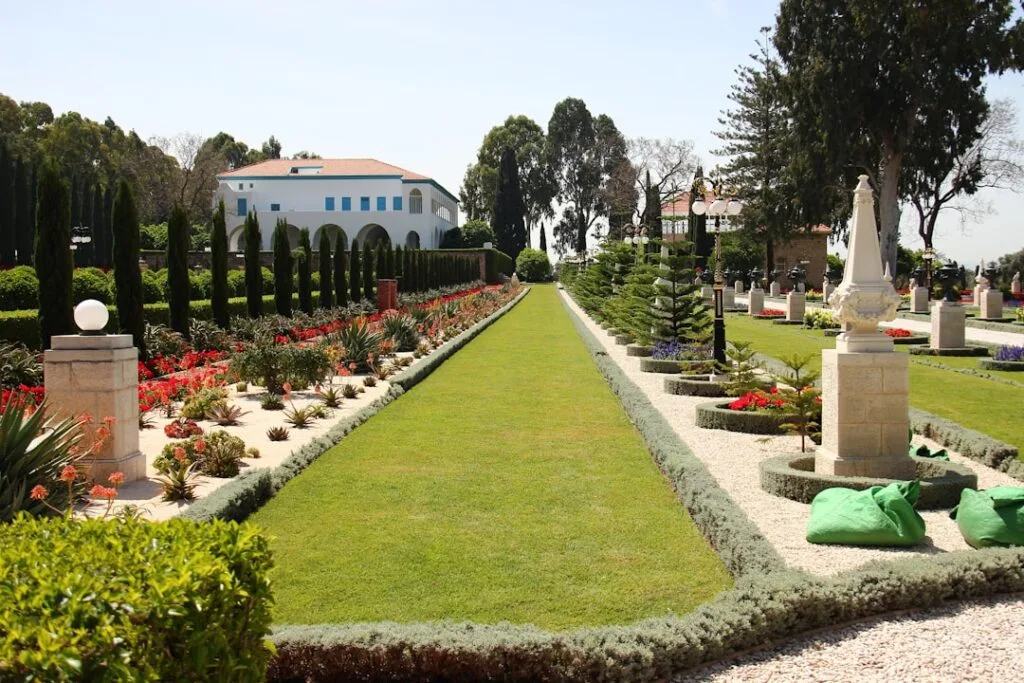
Reading the site through a landscape lens reveals a strong focus on perspective: terraced paths that draw the eye to the lake, groves that frame sculptures, and flower beds designed to offer a succession of scenes through the seasons. The historic greenhouses and orangeries, still visible, bear witness to the tradition of growing citrus in pots — a key practice in temperate gardens where winter protection is necessary. Practical tips: arrive early in high season (June–September) to avoid crowds and enjoy the morning light on the terraces; the public car park on Viale Regina 1 in Tremezzo is less than a 10-minute walk away. A themed guided tour (often in Italian and English) can be booked via the foundation’s official site; allow 1.5–2 hours for a full visit to the gardens and villa.
 Click here to book your ticket for Villa Carlotta
Villa del Balbianello and the art of romantic composition
Villa del Balbianello, Via Guido Monzino 1, 22016 Lenno (CO), is a masterpiece of landscape siting, perched on a rocky promontory that plunges into the lake. Opening hours vary by season: generally 10:00–18:00 in low season and 9:30–19:00 in high season; guided-visit prices are often around €12–16 for adults (reduced rates for youth and students). The site is managed by the FAI (Fondo Ambiente Italiano) and garden visits are usually accompanied by a guide, because the terrain is steep and the paths are exclusive.

The landscape evolution here reflects the 19th-century romantic spirit: composed panoramic views, winding paths and picturesque elements such as loggias, statues and deliberately arranged architectural “ruins.” Mediterranean plantings — olive trees, umbrella pines, cypresses — converse with more exotic beds brought in during the 18th–19th centuries. The garden functions as a series of viewpoints: each terrace offers a new perspective on the lake and the Lombard Alps. Practical tips: you can reach the villa by boat from the jetties at Tremezzo or Lenno (a 10–20 minute trip depending on departure). There are many stairs and the visit requires good mobility; wear closed, comfortable shoes. Booking is highly recommended in summer, especially at weekends.
Click here to book a guided tour of Villa del Balbianello
Bellagio, Villa Melzi and the lakeside promenade: public garden and urban development
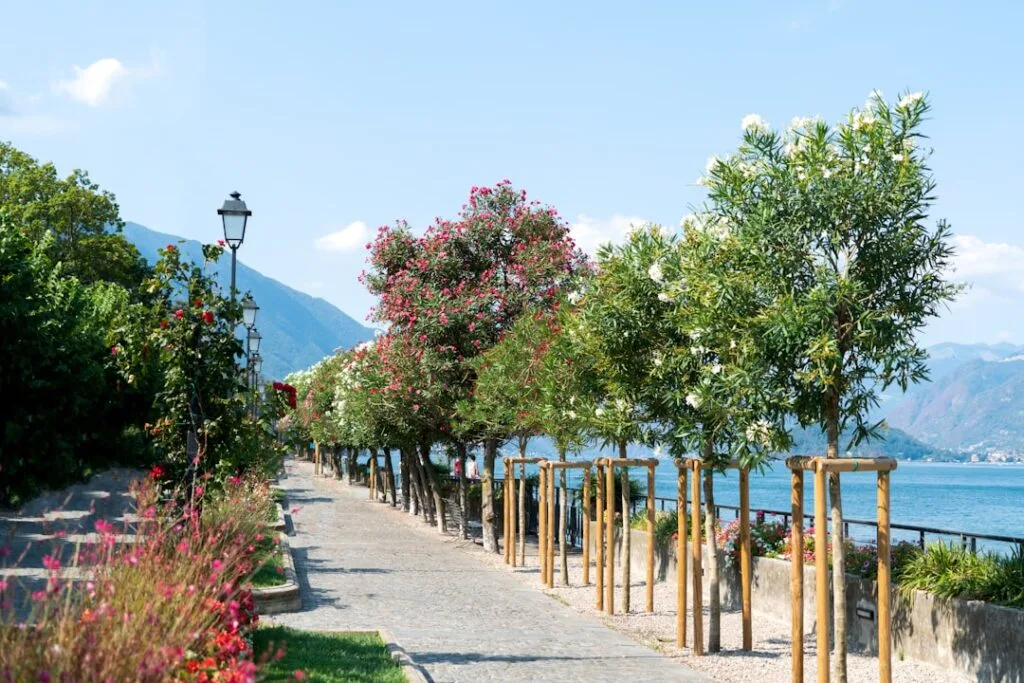
Bellagio, often nicknamed “the pearl of the lake,” offers an intimate link between private gardens and public space. The Parco di Villa Melzi d’Eril, Lungolago Manzoni 4, 22021 Bellagio (CO), is a neoclassical garden open to the public, with a main avenue running along the lake, statues and a historic greenhouse. Typical hours: 8:30–19:00 (seasonal). Admission is around €6 for adults, with reductions for children and seniors. In Bellagio, the landscape narrative extends beyond an estate: the lakeside promenade, quays and small squares form a continuous landscape where municipally maintained planting complements private gardens.
Villa Melzi exemplifies the shift from private garden to public use: originally designed as the grounds of an aristocratic residence, it gradually opened its paths to visitors. The layout emphasizes botanical variety — magnolias, camellias, water lilies — and carefully framed views of the lake and surrounding mountains. The park includes information panels on some rare species, making it a site for botanical education. Practical tips: the walk along the Lungolago is free and provides remarkable viewpoints; the best time to visit Villa Melzi is during the golden hour (late afternoon) for color and light, though mornings are ideal for a peaceful visit. If you arrive by ferry, disembark at Bellagio’s landing (Piazza Mazzini); from there the park is a 5–10 minute walk.
Click here to book a cooking workshop at Villa Melzi
Contemporary approaches: sustainable gardens, biodiversity and rehabilitation
Current developments in landscape architecture around Lake Como are marked by a growing focus on sustainability: adapting plantings to microclimates, reducing water inputs, creating ecological corridors to support local wildlife, and rehabilitating historic gardens with less invasive techniques. Recent projects have turned old kitchen gardens and unused plots into community gardens and educational spaces for local schools. These initiatives combine the preservation of landscape heritage with a renewal of horticultural practices.
Increasingly, site managers — conservation associations, municipalities and private owners — conduct ecological diagnostics before any intervention: species mapping, soil analysis and usage studies. These steps allow gardens to be reconfigured to favor local, drought-resistant species and to reintroduce wildflower meadows that support pollinators. In Como itself, the refurbishment of certain quays and promenades (near Piazza Duomo, 22100 Como) includes planting trees suited to the location and creating planting strips that enhance urban biodiversity. Practical tips: check with the Como tourist office (Piazza Cavour 10, usually open 9:00–18:00) for themed nature tours; take part in local workshops if you want ideas to bring back to your own garden.
Conclusion: reading, understanding and experiencing Lake Como’s gardens
The gardens around Lake Como form a multi-layered narrative: from aristocratic ornamentation to public use, and now to contemporary reinvention for biodiversity and climate resilience. Each site you visit — whether Villa Carlotta, Villa del Balbianello, Villa Melzi or the urban promenades of Como and Bellagio — offers a distinct lesson in landscape architecture: balancing plant masses, framing water views, creating dialogues between built elements and nature, and managing resources. For the visitor, this means a garden is not merely a backdrop: it’s a living archive, a testing ground for planting practices and a social space.
On a practical level, my recommendations are straightforward: check hours and prices before you go (museums and gardens often change opening times seasonally), book guided visits in advance for Villa del Balbianello and some FAI properties, favor quiet times (early morning or late afternoon) for photos and a more immersive experience, and combine boat trips with walks to fully grasp the lake–land relationship. During visits, respect conservation rules: don’t pick plants, stay on marked paths and avoid feeding wildlife.
Finally, for landscape architecture enthusiasts or gardeners, Lake Como is an endless source of inspiration: it shows how people learned to compose with a demanding yet generous landscape, and how today those principles can be reinterpreted to create gardens that are sustainable, beautiful and accessible. Whether you’re seeking beauty, technical lessons or a quiet moment by the water, Lake Como’s gardens offer a route that is both historic and thoroughly contemporary.